 Md. Ariful Islam
Running an e-commerce business is no longer just about having a good product and putting it online. With thousands of online stores competing for the same customers, businesses need a clear e-commerce marketing strategy to attract visitors, build trust, increase conversions, and encourage repeat purchases.
You may already be getting website traffic, running social media campaigns, or spending money on advertising. But if those efforts are not turning visitors into paying customers, the problem may not be your product. It could be your marketing strategy.
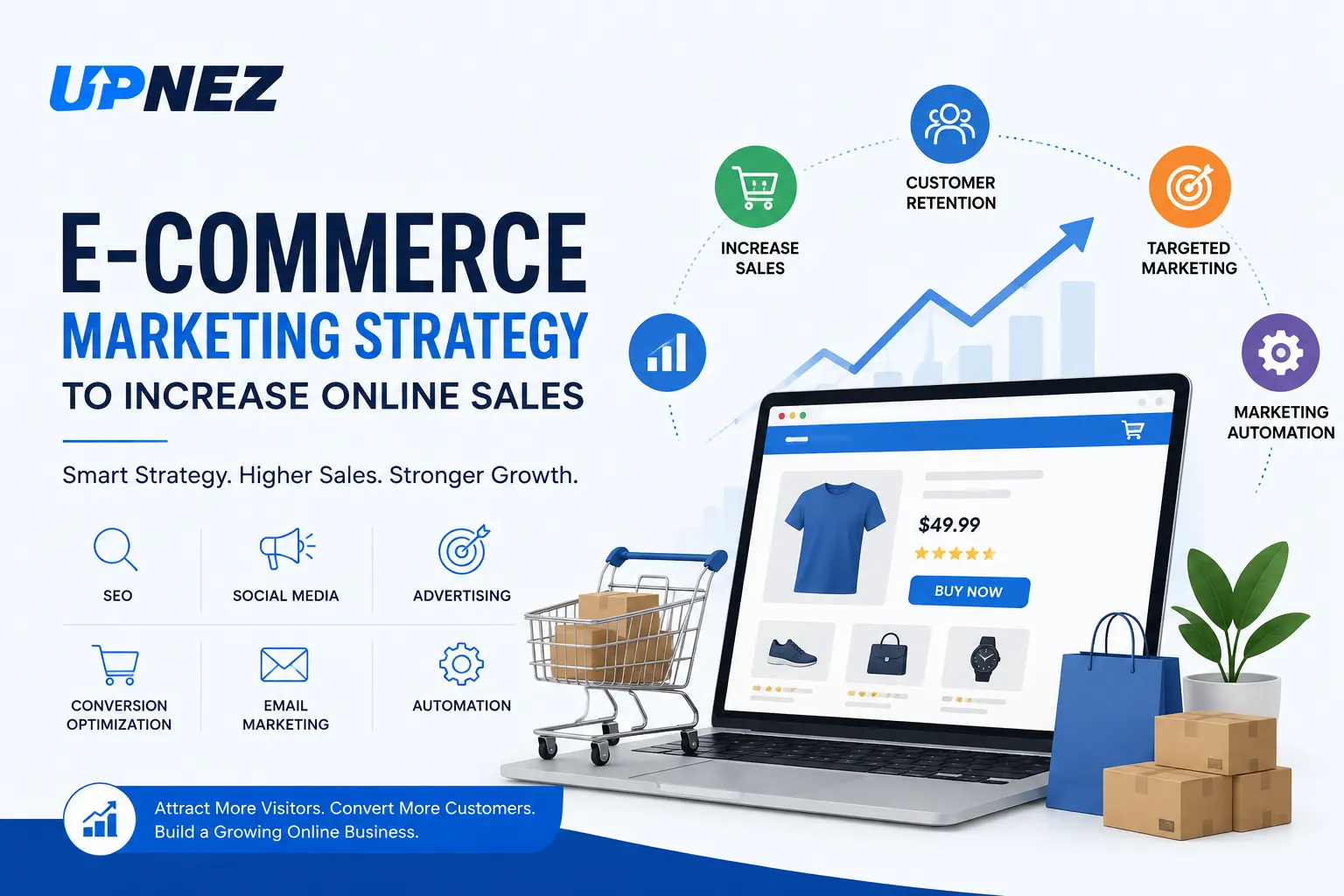
A successful e-commerce marketing strategy connects multiple areas of digital marketing, including SEO, content marketing, social media, paid advertising, conversion optimization, customer retention, and automation.
Here are 12 practical strategies that can help an online store increase sales and build sustainable growth.
1. Build a Strong E-Commerce SEO Foundation
Search engines can be one of the most valuable sources of long-term traffic for an online store.
When potential customers search for products, comparisons, solutions, or recommendations, your website needs to appear where they are looking.
Start by optimizing:
- Product titles
- Product descriptions
- Category pages
- Meta titles and descriptions
- Image alt text
- URLs
- Internal links
- Website speed
- Mobile experience
Don’t focus only on product keywords. Create content around what your customers are actually searching for.
For example, instead of targeting only “office chair,” an online furniture store could create content around searches such as:
“Best office chair for working from home”
“How to choose an ergonomic office chair”
These searches can introduce your brand to customers before they are ready to purchase.
2. Optimize Your Product Pages for More Conversions
Getting people to your website is only the first step.
Your product page needs to convince visitors that your product is worth buying.
A strong product page should include:
- Clear product photography
- Detailed descriptions
- Product benefits
- Pricing
- Customer reviews
- Frequently asked questions
- Shipping information
- Return policies
- Trust signals
- A clear call-to-action
Think about the questions a customer might have before purchasing and answer them directly on the page.
The easier you make the buying decision, the fewer reasons customers have to leave.
3. Use Content Marketing to Attract Potential Customers
Content marketing can help e-commerce businesses attract customers who are researching a product before making a purchase.
Useful content includes:
- Buying guides
- Product comparisons
- How-to articles
- Product tutorials
- Frequently asked questions
- Industry guides
- Case studies
- Product reviews
For example, a skincare business could publish:
“How to Build a Simple Skincare Routine for Beginners”
The article can educate the reader while naturally introducing relevant products.
This approach allows your business to provide value first and sell second.
4. Turn Social Media Into a Sales Channel
Social media is more than a place to post product photos.
E-commerce brands can use platforms such as Facebook, Instagram, TikTok, and YouTube to demonstrate products, answer customer questions, share reviews, and build a recognizable brand.
Consider creating:
- Product demonstration videos
- Before-and-after content
- Customer testimonials
- User-generated content
- Behind-the-scenes videos
- Educational posts
- Short-form videos
- Product comparisons
People often want to see a product in action before they buy it.
Your social media content should therefore help customers understand why they need the product, not simply tell them that the product exists.
5. Make Paid Advertising Work With Your Organic Marketing
Paid advertising can generate traffic quickly, but spending more money does not automatically mean generating more sales.
Your advertising strategy should connect with your website, landing pages, product pages, analytics, and conversion strategy.
Depending on your business, this could include:
- Google Ads
- Shopping campaigns
- Meta advertising
- Retargeting
- Product-focused campaigns
- Promotional campaigns
Before increasing your advertising budget, make sure you understand your:
Customer acquisition cost, conversion rate, and return on ad spend.
If your website converts poorly, sending more paid traffic may simply increase your expenses.
6. Recover Abandoned Shopping Carts
One of the biggest missed opportunities for an e-commerce business is a customer who adds a product to their cart but never completes the purchase.
There can be many reasons:
- Unexpected shipping costs
- Complicated checkout
- Distractions
- Comparison shopping
- Lack of trust
- Customers simply needing more time to decide
An abandoned-cart recovery strategy can bring some of those customers back.
For example:
Customer adds product → Leaves website → Automated reminder → Product benefit → Follow-up offer → Customer returns
This is where marketing automation becomes especially valuable.
Instead of manually tracking every abandoned cart, an automated workflow can handle the follow-up consistently.
7. Personalize the Customer Experience
Not every customer wants the same thing.
A first-time visitor may need education and trust-building, while an existing customer may be ready for a complementary product.
E-commerce businesses can use customer information to create more relevant experiences through:
- Product recommendations
- Personalized email campaigns
- Customer segmentation
- Previous purchase data
- Personalized offers
- Cross-selling
- Upselling
For example, someone who recently purchased a camera might be interested in lenses, memory cards, or camera bags.
Relevant recommendations can increase both customer satisfaction and average order value.
8. Improve Your E-Commerce Conversion Rate
More visitors do not necessarily mean more revenue.
Imagine 10,000 people visit your store, but only 50 purchase. Increasing traffic might not solve the real problem.
You may need to improve your e-commerce conversion rate.
Look at the entire customer journey:
Visitor → Product view → Add to cart → Checkout → Purchase
Identify where customers are leaving.
Common conversion problems include:
- Slow-loading pages
- Poor mobile design
- Weak product descriptions
- Complicated checkout
- Limited payment options
- Unexpected costs
- Lack of reviews
- Weak calls-to-action
Small improvements at different stages can have a meaningful impact on overall sales.
9. Focus on Customer Retention, Not Just Customer Acquisition
Getting a new customer can require significant marketing effort.
That is why successful e-commerce businesses should not focus entirely on acquiring new customers. They should also build relationships with existing ones.
Retention strategies can include:
- Post-purchase emails
- Loyalty programs
- Special offers
- Product recommendations
- Reorder reminders
- Personalized campaigns
- Customer feedback requests
- Referral programs
A customer who already knows and trusts your brand may be more likely to purchase again than someone discovering your business for the first time.
10. Automate Your E-Commerce Marketing
As your store grows, manually managing every customer interaction becomes increasingly difficult.
Automation can help businesses handle repetitive marketing activities more efficiently.
For example:
New customer → Welcome message → Purchase → Order confirmation → Review request → Product recommendation → Repeat-purchase campaign
Other useful e-commerce automation workflows include:
- Abandoned-cart reminders
- Lead follow-ups
- Customer segmentation
- Promotional notifications
- Review requests
- Re-engagement campaigns
- Internal sales notifications
The objective isn’t to remove the human element from marketing.
It’s to make sure important tasks happen consistently without requiring your team to remember every step.
11. Track the Metrics That Actually Matter
Marketing decisions should be based on data rather than assumptions.
Some of the most useful e-commerce metrics include:
| Metric | Why It Matters |
|---|---|
| Conversion Rate | Shows how effectively your website turns visitors into customers |
| Customer Acquisition Cost | Shows how much it costs to acquire a customer |
| Average Order Value | Shows how much customers typically spend |
| Return on Ad Spend | Measures advertising efficiency |
| Cart Abandonment Rate | Shows how many potential purchases are being lost |
| Customer Lifetime Value | Estimates the long-term value of a customer |
| Repeat Purchase Rate | Shows how effectively you retain customers |
Tracking these numbers helps you identify where your marketing is working and where improvements are needed.
12. Build an E-Commerce Marketing Strategy That Can Scale
The strongest e-commerce marketing strategy isn’t based on a single channel.
SEO can bring organic traffic.
Content can educate potential customers.
Social media can build awareness.
Paid advertising can accelerate customer acquisition.
Conversion optimization can turn more visitors into buyers.
Automation can reduce repetitive work.
Customer retention can increase long-term revenue.
These areas should work together rather than operating as separate activities.
For example:
SEO → Website Traffic → Product Page → Conversion → Purchase → Automated Follow-Up → Repeat Purchase
That’s a system, not just a marketing campaign.
Common E-Commerce Marketing Mistakes to Avoid
Even businesses with good products can struggle because of avoidable marketing mistakes.
Some common examples include:
Focusing only on traffic:
Traffic is valuable, but sales and profitability matter more.
Ignoring mobile customers:
A large portion of online shopping happens through mobile devices, so your store needs to provide a smooth mobile experience.
Running ads without tracking results:
Without reliable data, it becomes difficult to know which campaigns are actually generating revenue.
Using weak product descriptions:
Customers need enough information to feel confident about purchasing.
Ignoring abandoned carts:
Potential customers who leave without buying shouldn’t automatically be considered lost forever.
Only targeting new customers:
Existing customers can be an important source of repeat revenue.
Trying every marketing channel at once:
It’s usually better to identify the channels that fit your audience and business model, then execute them properly.
When Should You Invest in E-Commerce Marketing?
You don’t need to wait until your online store becomes a large business.
If you’re experiencing any of these problems, it may be time to improve your marketing strategy:
- Your store receives traffic but generates few sales
- Your advertising costs are increasing
- Customers abandon their carts
- Your website doesn’t convert well
- Organic traffic is low
- Customers rarely purchase again
- Marketing activities are handled manually
- Your team struggles to keep up with customer follow-ups
The earlier you identify these problems, the easier it can be to build processes that support long-term growth.
How UPNEZ Can Help Your E-Commerce Business
Growing an online store requires more than simply launching a website.
You need a digital system that attracts potential customers, creates a strong buying experience, converts visitors, and keeps customers engaged after the purchase.
UPNEZ can help businesses approach these challenges through digital solutions such as website development, digital marketing, SEO, user experience, and intelligent business automation.
The goal is simple:
Attract better customers. Convert more visitors. Automate repetitive work. Build lasting growth.
Final Thoughts
E-commerce success doesn’t come from one marketing trick.
It comes from building a connected system where your website, content, SEO, social media, advertising, conversion strategy, automation, and customer retention efforts support one another.
If your online store is getting traffic but not enough sales, don’t immediately assume you need more traffic.
Sometimes the better question is:
“What is stopping the customers I already have from buying?”
Find that bottleneck, improve it, measure the result, and continue optimizing.
Your e-commerce store should do more than exist online. It should work as a growth engine for your business.
Ready to build a smarter e-commerce growth strategy? Talk to UPNEZ.
